Gang Sheet Printing in New Jersey and Why It Saves You Money
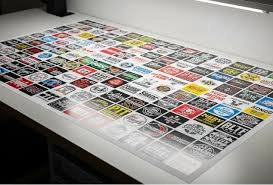
If you’ve ordered custom shirts or worked with a DTF supplier, you’ve probably seen the term “gang sheet” and wondered what it means. It sounds technical but the concept is straightforward — and once you understand it, you’ll see why most people who order custom transfers regularly use gang sheets as their default format.
What a Gang Sheet Actually Is
A gang sheet is a single large piece of film with multiple designs printed together. Instead of ordering each design as a separate individual transfer, you tile multiple designs side by side on one sheet and order the sheet.
The sheet is typically 22 inches wide and comes in various lengths — you’re paying for the amount of film you use. The number of designs that fit depends on their size. Smaller designs pack more tightly. Larger designs take more space.
When the sheet arrives, you cut it into individual transfers and apply each one separately to a garment. The film works the same way as an individual transfer — same heat, same pressure, same peel.
Why Gang Sheets Save Money
The cost advantage is simple: you’re paying for film, not for individual setups.
If you order 10 individual transfers at $0.50 each, you pay $5.00. If you tile those same 10 designs onto a $2.50 gang sheet that fits them all, you pay $2.50. Half the cost for the same output.
The savings grow as you add more designs. A decorator managing 15 client orders can batch all 15 designs onto two gang sheets. Instead of paying 15 individual transfer prices, they pay for two sheets. The cost per design drops significantly.
For anyone ordering DTF gang sheets in New Jersey with mixed designs — multiple designs for one client, or multiple small orders for different clients — gang sheets are almost always the right structure.
DTF Jersey offers direct gang sheet uploads — you arrange your designs on the sheet before uploading, or use their builder tool to handle the layout automatically. Same-day shipping means your gang sheet can be in production today and in your hands tomorrow.
When Gang Sheets Make the Most Sense
You have multiple small designs. Four different logo placements for the same client. A team with a chest design and a sleeve design. A business with primary logo and secondary mark. Tile them all on one sheet.
You’re a decorator managing multiple client orders. Batch a week’s worth of varied client designs onto one or two sheets. Press them as orders come in.
You want to test multiple designs cheaply. You have four design ideas and want to see how they look printed. Order a single gang sheet with all four instead of ordering four separate individual transfers.
You’re ordering small quantities of many sizes. A shirt design in S, M, L, XL at different print placements can all go on one gang sheet for less than ordering individual transfers per size.
When Individual Transfers Make More Sense
Gang sheets require some planning — you’re arranging designs before ordering. For a single design where you need many copies fast, ordering individual transfers of that one design might be simpler.
If you need 100 copies of the same 4-inch design, you can tile them on a gang sheet for maximum savings. But if you just need one transfer of one design quickly, individual ordering is faster without much cost difference.
The tipping point is usually around three or more different designs. Below that, individual transfers are fine. Above that, gang sheets almost always win on price.
How to Prepare a Gang Sheet File
You can upload a pre-arranged gang sheet or use a builder tool.
Pre-arranged: Create a 22-inch wide document in Photoshop, Illustrator, or Canva. Place your designs in rows with 0.5-inch gaps between them. Export as PNG. This gives you maximum control over how designs are arranged.
Builder tool: Upload individual design files and let the software tile them automatically. Faster to set up, slightly less control over exact placement.
Either way, designs should be PNG format with transparent backgrounds at 300 DPI. The supplier handles the white underbase layer needed for dark fabric printing.
Cutting Your Gang Sheet After Printing
The film ships as one piece. You cut it into individual transfers before pressing.
Standard scissors work for simple rectangular designs. A rotary cutter and mat give cleaner results if you’re cutting along design edges. Leave a small margin — about 0.25 inches — around each design to keep the film intact and prevent edge peeling after pressing.
Keep the film flat until you’re ready to press. Folded or bent film can crease in ways that affect adhesion.
The Practical Bottom Line
Gang sheet printing is a cost structure, not a technical complexity. Once you’ve ordered one, the process is intuitive. You arrange designs, order the sheet, cut it apart, press transfers. The per-design cost drops substantially compared to individual ordering.
For anyone regularly ordering custom transfers in New Jersey — whether for personal projects, a small business, or a decorator operation — gang sheets are the standard approach for good reason. You’re paying for film usage, not per design. Fill the sheet efficiently and you’ve already cut your transfer cost in half.